Introduction
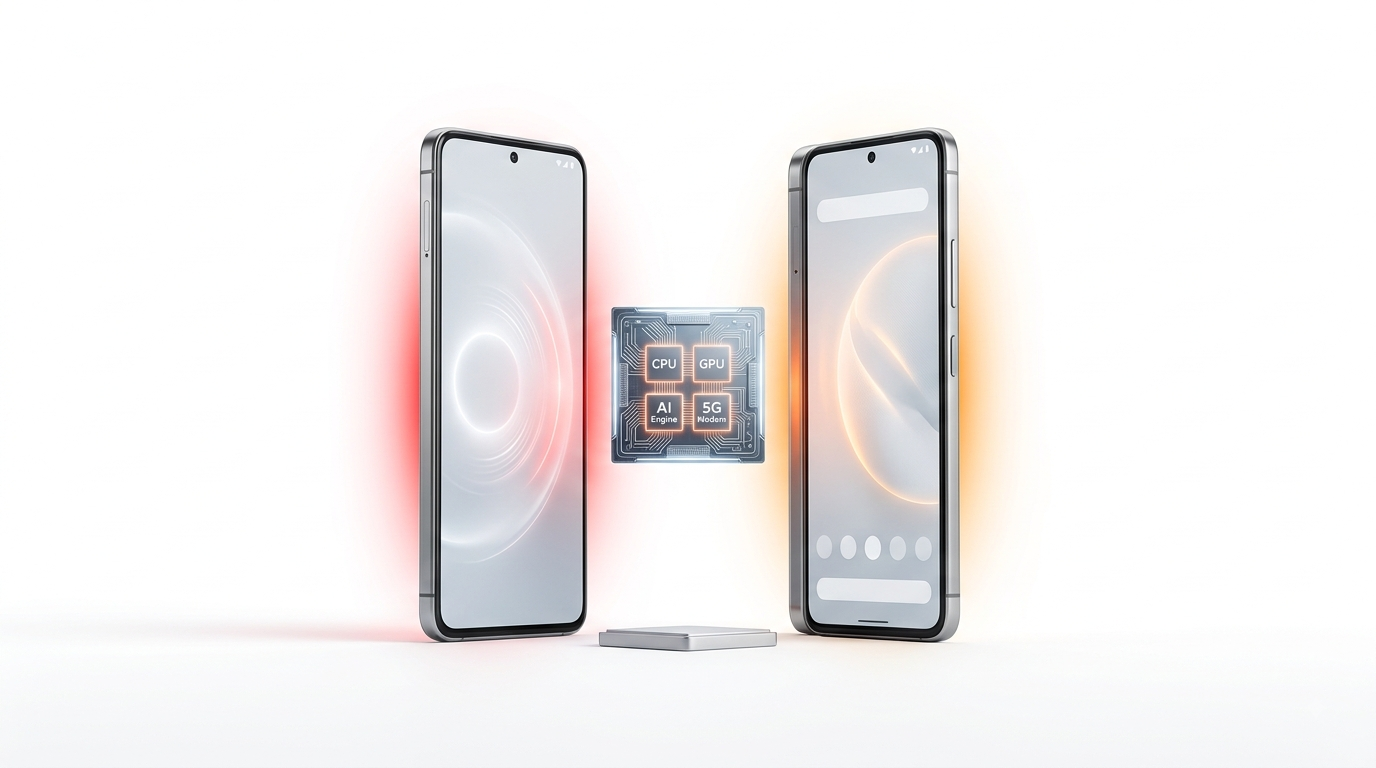
When buying a new smartphone, we often focus on the camera, display, battery, and design.
however, the processor plays a crucial role in the phone's speed and day-to-day user experience.
In the market, chipsets from companies like Qualcomm (Snapdragon) and MediaTek (Dimensity) are quite popular.
Both companies manufacture processors for a wide range of devices, from budget-friendly to premium smartphones.
This raises the question: which is better in 2026—Snapdragon or MediaTek? The answer isn't as simple as just looking at the brand name.
The right choice depends on your budget, the specific phone model, and how you intend to use it.
Let’s explore the key differences between the two.
What are Snapdragon and MediaTek?
Qualcomm's Snapdragon is a key processor series, while MediaTek is another company that manufactures smartphone chipsets.
Both companies' chipsets handle tasks such as gaming, camera processing, and connectivity.
Snapdragon chipsets are available across various price ranges, and MediaTek's Dimensity series is also found in budget, mid-range, and flagship phones.
Therefore, it is not accurate to assume that one company always produces better processors.
it is more useful to compare the capabilities and performance of individual chipsets.
Everyday performance
Most modern, high-quality processors can easily handle tasks like using social media, watching videos, sending messages, browsing the web, and switching between various apps.
The phone's software, RAM, storage, and the manufacturer's optimizations also play a significant role in how well these tasks are performed.
Both high-end Snapdragon and MediaTek Dimensity models are capable of handling daily tasks and multitasking.
For general usage, it is not necessary to spend extra money simply because a phone carries the "Snapdragon" brand name.
When purchasing a phone, check the specific chipset model. It would be inappropriate to compare a flagship-tier Snapdragon processor with an entry-level MediaTek one—and the same logic applies in reverse.
Which one is better for gaming?
For mobile gamers, GPU temperature control and sustained performance over long periods are crucial.
To ensure a great experience in popular games, one should look beyond just the processor name and also consider the phone's cooling system, display refresh rate, and game optimization.
Many powerful Snapdragon chipsets can deliver excellent graphics and stable frame rates for gaming.
in fact, some games are specifically optimized for Snapdragon GPUs.
However, high-end MediaTek Dimensity models also offer comparable gaming performance and serve as solid options across various smartphones.
For extended gaming sessions, look for comprehensive gaming tests and reviews regarding thermal performance, as benchmark scores do not provide the full picture.
Battery and Power Efficiency
How long a battery lasts depends on the processor, battery capacity, screen, network signal, and software.
Both companies design chips aimed at delivering high performance while consuming minimal power.
It is not accurate to claim that any single brand is always the most battery-efficient.
Even among phones with the same processor, battery life can vary due to differences in the display, battery capacity, and background apps.
If battery life is your top priority, look at reviews that cover real-world usage alongside the phone's battery capacity.
Battery backup during activities like video streaming, gaming, or using mobile data may differ from what you would experience with typical, everyday use.
Who is ahead in terms of camera quality?
The chipset plays a key role through its image signal processor (ISP) and AI capabilities, influencing aspects like color reproduction, night photography, and video processing.
However, the chipset alone does not determine the overall quality of a camera. The camera sensor, lens, and software tuning are equally important.
Not every phone with a Snapdragon processor takes excellent photos, nor does every phone with a MediaTek processor necessarily underperform.
Before making a purchase, look at sample shots—including daylight, night, portrait, and video footage.
If you create videos, also check for features like video stabilization, microphone quality, and the available recording options.
AI and connectivity features
In new smartphones, the importance of features such as photo editing, voice recognition, and language-related tasks is growing.
The processor's capabilities are crucial for enabling on-device AI features.
however, the specific features available depend not only on the chipset but also on the manufacturer's software and the phone's available memory.
For features like 5G, Wi-Fi, and Bluetooth, be sure to check the official specifications—including supported network bands and other options—as not every model includes all these features.
Heating and long-term performance
Recording long videos using the camera can cause your phone to heat up.
This isn't just about the camera itself; the phone's cooling system, the device's physical build, and the software all play a role.
The performance of chipsets from different companies varies depending on the specific phone.
Before making a purchase, check the gaming and temperature tests for that particular model.
If a phone gets too hot, its performance may drop.
Price and Value for Money
Many of MediaTek's competitors offer strong camera performance, making them attractive options within the budget segment.
Alternatives from Snapdragon are available across various price points, with some models specifically tailored for needs like gaming, photography, or enhanced connectivity.
When evaluating a phone, consider the full price alongside its RAM, storage, display, camera, battery, and software update policy.
Only pay extra if the additional features provide a tangible benefit to your actual usage.
Who is better for whom?
• General use:
Look at the price and software experience of solid mid-range phones from both companies.
• Mobile gaming:
Prioritize the chipset, GPU, cooling system, and gaming test results for the specific phone.
• Photos and videos:
Examine the camera sensor, review sample images, and compare the software processing.
• Better performance on a budget:
While MediaTek Dimensity chips offer great value, be sure to also evaluate Snapdragon-based models based on their price and features.
• Long-term usage:
Beyond the processor, consider factors like the software update policy, battery life, and after-sales support.
Final verdict
In 2026, it wouldn't be fair to call either Snapdragon or MediaTek the winner in every situation.
Both companies have processors suited to different needs and budgets.
Some Snapdragon chipsets may be better options for premium gaming or specific apps, while some MediaTek Dimensity chipsets can offer strong performance at a lower price.
So, when buying a new phone, look at the exact model of the processor and the actual performance of the phone across brands.
Consider your primary priorities, such as gaming, camera, battery, or price, and compare accordingly.
The choice is based on the one that offers reliable performance and essential features within your budget.